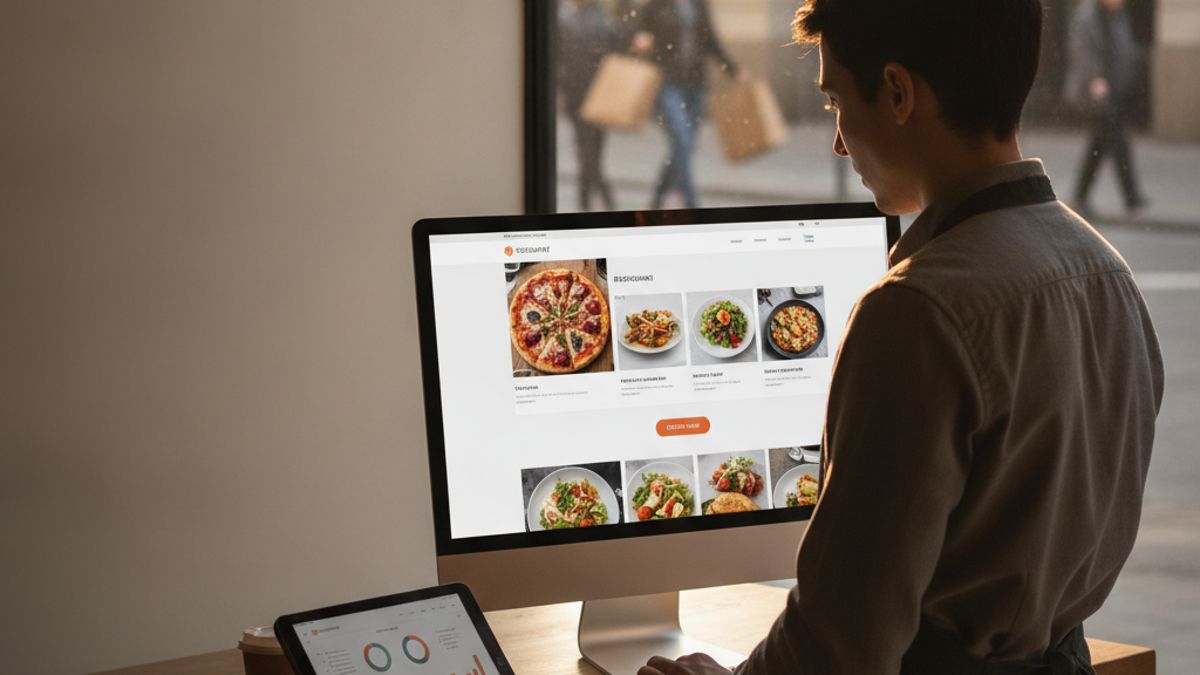
How to build a restaurant website that converts visitors into direct orders
For years, independent restaurant owners treated their websites like digital brochures. They uploaded a PDF menu, added a phone number, and perhaps included a photo of the dining room. Today, that approach is no longer enough. Your website is the most crucial piece of your digital real estate. It must do more than just look good. You need to build a restaurant website that converts visitors into direct orders, helping you bypass the steep commissions of third-party delivery apps.
When a hungry customer lands on your page, they are usually ready to buy. The question is whether your website makes it easy for them to complete that purchase, or if a clunky design sends them back to a delivery aggregator. Taking control of your online presence means designing an experience that guides visitors seamlessly from browsing to checkout. This protects your profit margins and allows you to own your customer relationships.
In this comprehensive guide, we will explore exactly how to transform your online storefront into a powerful sales engine. From mobile optimisation and high-quality photography to frictionless checkout flows, we will cover the practical steps you need to take. By the end, you will understand how to build a digital presence that drives real revenue for your independent restaurant.
Contents
- Why your restaurant website needs to focus on direct orders
- Mobile-first design for hungry customers on the go
- Replacing PDF menus with interactive digital layouts
- High-quality food photography that drives sales
- Creating a frictionless checkout and payment process
- Integrating a zero-commission ordering platform
- Optimising your digital storefront for local search
- Leveraging customer data from direct orders
- Converting third-party app users to your own website
- Conclusion: taking control of your online presence
Why your restaurant website needs to focus on direct orders
The hospitality industry has seen a massive shift towards off-premise dining. Delivery and takeaway are no longer just supplementary income streams; they are core business functions. However, relying entirely on third-party marketplaces is a dangerous game. These platforms often charge commissions ranging from 15 to 30 percent. This takes a massive bite out of your already thin profit margins.
When you focus on restaurant website direct orders, you immediately reclaim those lost profits. Every order placed directly through your site is an order where you keep the entire margin. Furthermore, direct orders give you complete control over the customer experience. If a driver from an aggregator app delivers cold food, the customer blames your restaurant. When you control the channel, you manage the quality from the kitchen to the customer's front door.
Perhaps most importantly, direct orders give you access to customer data. Marketplaces mask customer emails and phone numbers, effectively renting your own customers back to you. When guests order through your website, you capture their contact information. This allows you to build a loyalty program, send promotional offers, and encourage repeat business. Focusing on direct orders is not just about saving on fees; it is about securing the long-term future of your business.
Mobile-first design for hungry customers on the go
The vast majority of food orders are placed on mobile devices. If your website is difficult to navigate on a smartphone, you will lose sales instantly. Mobile-first design means creating your website for small screens first, and then scaling it up for desktop users. It requires a fundamental shift in how you organise information.
First, your call-to-action buttons must be prominent and thumb-friendly. A large "Order Now" button should be visible the second the page loads, without the user needing to scroll. This button should remain "sticky" at the top or bottom of the screen as the user navigates the page. Do not make hungry customers hunt for the checkout button.
Second, loading speed is critical. Mobile users are notoriously impatient. If your site takes more than a few seconds to load, visitors will abandon it and head to a competitor. Compress your images, use efficient coding practices, and host your site on a reliable server. Fast load times not only improve conversion rates but also help your search engine rankings.
Finally, ensure your navigation is simple. Avoid cluttered dropdown menus. Use a clear, logical structure that categorises your food items effectively. Starters, mains, sides, and drinks should be easy to jump between. A smooth mobile experience is the foundation of any strategy to increase restaurant website direct orders.
Replacing PDF menus with interactive digital layouts
One of the most common mistakes independent restaurants make is uploading a PDF version of their printed menu. PDFs are terrible for user experience. They require users to pinch, zoom, and pan around the screen just to read the text. Furthermore, search engines cannot easily read the text inside a PDF, which hurts your local SEO efforts.
Instead, you need an interactive, web-based menu. Each item should have its own section with a clear title, a mouth-watering description, and a specific price. This layout allows customers to easily tap an item to add it to their basket. It also gives you the opportunity to implement smart upselling features.
For example, if a customer selects a burger, an interactive menu can automatically prompt them to add chips or a drink. You can highlight popular items, chef specials, or high-margin dishes at the top of the menu. This level of control is impossible with a static PDF. Transitioning to a dynamic digital menu is a vital step toward an all in one restaurant platform that streamlines your operations.
High-quality food photography that drives sales
People eat with their eyes first. In a physical restaurant, the smell of food and the sight of plates passing by can stimulate an appetite. Online, you only have your photography. High-quality images are essential for a restaurant website that converts visitors into direct orders.
Invest in professional photography if possible. If you must take photos yourself, rely on natural lighting. Avoid harsh shadows and artificial flash, which can make food look unappetising. Ensure the background is clean and complements the dish. Consistency is key; all your images should share a similar style and lighting setup to create a cohesive brand image.
However, do not use stock photos. Customers can spot them instantly, and it creates a sense of distrust. They want to see exactly what they will receive. A well-lit, honest photograph of your best-selling dish is worth a thousand descriptive words. When a customer sees an irresistible image of your signature pizza, they are far more likely to click the order button.
Creating a frictionless checkout and payment process
Cart abandonment is a massive problem in online food ordering. A customer takes the time to select their meal, but they leave before paying. Often, this happens because the checkout process is too long, complicated, or confusing. To maximise direct orders, you must remove every possible point of friction.
First, always offer a guest checkout option. Forcing customers to create an account before they can buy food is a guaranteed way to lose sales. Allow them to order with just an email address or phone number. You can always ask them to save their details for next time after the transaction is complete.
Next, support multiple payment methods. While credit and debit cards are standard, digital wallets like Apple Pay and Google Pay are increasingly popular. These methods allow customers to pay with a single tap or glance, bypassing the need to type out long card numbers. The faster they can pay, the less time they have to change their minds.
Finally, be transparent about delivery fees and estimated wait times upfront. Do not surprise customers with hidden charges on the final screen. If a customer feels misled, they will abandon the cart and likely never return. Clear communication builds trust and encourages completion.
Integrating a zero-commission ordering platform
Building an ordering system from scratch is incredibly expensive and technically challenging. This is why many independent operators settle for third-party aggregators. However, there is a better way. By integrating a zero-commission, white-label ordering solution directly into your website, you get the best of both worlds.
A white-label platform adopts your brand colours, your logo, and your tone of voice. The customer never feels like they have left your website. This builds immense trust. You can learn more about this approach by reading our guide on White-label restaurant ordering: building your own brand instead of renting customers.
When choosing a platform, ensure it connects seamlessly with your existing technology. A system like Tayim allows online orders to flow directly into your Point of Sale (POS) and Kitchen Display System (KDS). This eliminates the need for staff to manually re-enter orders from a separate tablet. It reduces errors, speeds up service, and creates a highly efficient kitchen environment.
Optimising your digital storefront for local search
A beautiful, high-converting website is useless if no one can find it. Optimising your site for local search engines ensures that when hungry people in your area look for food, your restaurant appears at the top of the results. Local SEO is a critical component of driving restaurant website direct orders.
Start by claiming and verifying your Google Business Profile. Ensure your address, phone number, and opening hours are perfectly accurate. Crucially, add a direct link to your website's ordering page. Google often prioritises third-party delivery links by default, so you must explicitly set your direct channel as the preferred option.
On your website itself, use local keywords naturally within your content. If you serve authentic Neapolitan pizza in Berlin, make sure phrases like "best Neapolitan pizza in Berlin" or "pizza delivery in Kreuzberg" appear in your text. Include your location in the footer of every page. Consistent local signals tell search engines exactly where you are and who you serve.
Encourage satisfied dine-in guests to leave positive reviews online. Respond to these reviews promptly, thanking the customer and subtly mentioning your direct ordering options. Search engines favour businesses that actively engage with their community, which in turn drives more organic traffic to your digital storefront.
Leveraging customer data from direct orders
The greatest hidden benefit of direct orders is data ownership. When a customer orders through a marketplace, you learn very little about them. When they order through your website, you capture their name, email, order history, and preferences. This data is the fuel for sustainable business growth.
With this information, you can build targeted marketing campaigns. If a customer frequently orders vegan dishes on Tuesday evenings, you can send them a tailored promotion for a new vegan special early on a Tuesday afternoon. This level of personalisation dramatically increases the chances of a repeat order.
You can also use this data to identify your most valuable customers and reward them through a loyalty program. Automated emails wishing them a happy birthday or offering a discount after their tenth order can turn casual buyers into brand advocates. To dive deeper into this topic, explore our post on Restaurant marketing automation: turning your direct ordering data into repeat sales.
Converting third-party app users to your own website
While third-party apps take a hefty commission, they are excellent for initial customer acquisition. They put your brand in front of thousands of local users. The trick is to use these platforms to get the first order, and then convince the customer to place their second order directly through your website.
One of the most effective strategies is the use of package inserts. Include a beautifully designed flyer in every aggregator delivery bag. Offer a compelling discount, such as 15 percent off their next order, exclusively if they use your direct website. Make sure your web address and a scannable QR code are prominent on the flyer.
You can also adjust your pricing strategy. Many restaurants subtly increase their prices on delivery apps to offset the commission costs. You can advertise your website as the place to get the "true" or "lowest" price. When customers realise they can save money while supporting a local business, many will gladly make the switch.
Finally, ensure your packaging itself promotes your direct channels. Custom stickers on boxes or branded bags that read "Order direct for exclusive deals" act as mini billboards in the customer's home. It requires consistent effort, but transitioning these customers is the fastest way to boost your restaurant website direct orders.
Conclusion: taking control of your online presence
Building a high-converting website is no longer an optional extra for independent operators; it is a fundamental requirement for survival and growth. By shifting your focus away from expensive aggregators and towards restaurant website direct orders, you protect your hard-earned margins and build lasting relationships with your local community.
The process requires attention to detail. You must prioritise mobile-first design, replace outdated PDF menus with interactive digital experiences, and showcase your food with stunning photography. Crucially, you must eliminate friction at checkout and integrate a system that makes ordering effortless for the customer and manageable for your kitchen staff.
Platforms like Tayim are built specifically for independent European operators who want to regain control. By providing a comprehensive suite of tools that handle everything from zero-commission direct ordering to POS and KDS integration, Tayim empowers you to run your digital operations as smoothly as your dining room. Start focusing on your direct channels today, and watch your profit margins grow.
Tags
Why Tayim?
- Zero commission - we take no percentage of your orders, unlike Glovo or UberEats which charge 15-30%
- All-in-one platform - POS, KDS, online ordering, delivery management, and analytics in one system
- Transparent pricing - free plan available, Solo at EUR 39/month, Multi at EUR 119/month
- Fully white-label - your customers see only your brand, not ours
- Custom on demand - we adapt the platform for any language, country, or specific need
Ready to modernize your restaurant?
Discover how Tayim can simplify your operations and eliminate commissions.